
What is RTT?
Rapid Transformational Therapy, or RTT, is a way of working with the subconscious mind to understand where a pattern began and to change what it means to you today.
In a session, you settle into a relaxed, focused state. Together we explore the moments and beliefs connected to what you want to change, and you look at them again with the understanding you have as an adult now.
Afterwards you receive a personal recording made for you. You listen to it every day for 30 days, so the new way of thinking has time to become familiar.
RTT was created by Marisa Peer. It brings together hypnotherapy, cognitive behavioural therapy, neuroplasticity principles and several other approaches. People come to it for stress, worry, confidence, money beliefs and habits that keep repeating.
What happens in an RTT session?
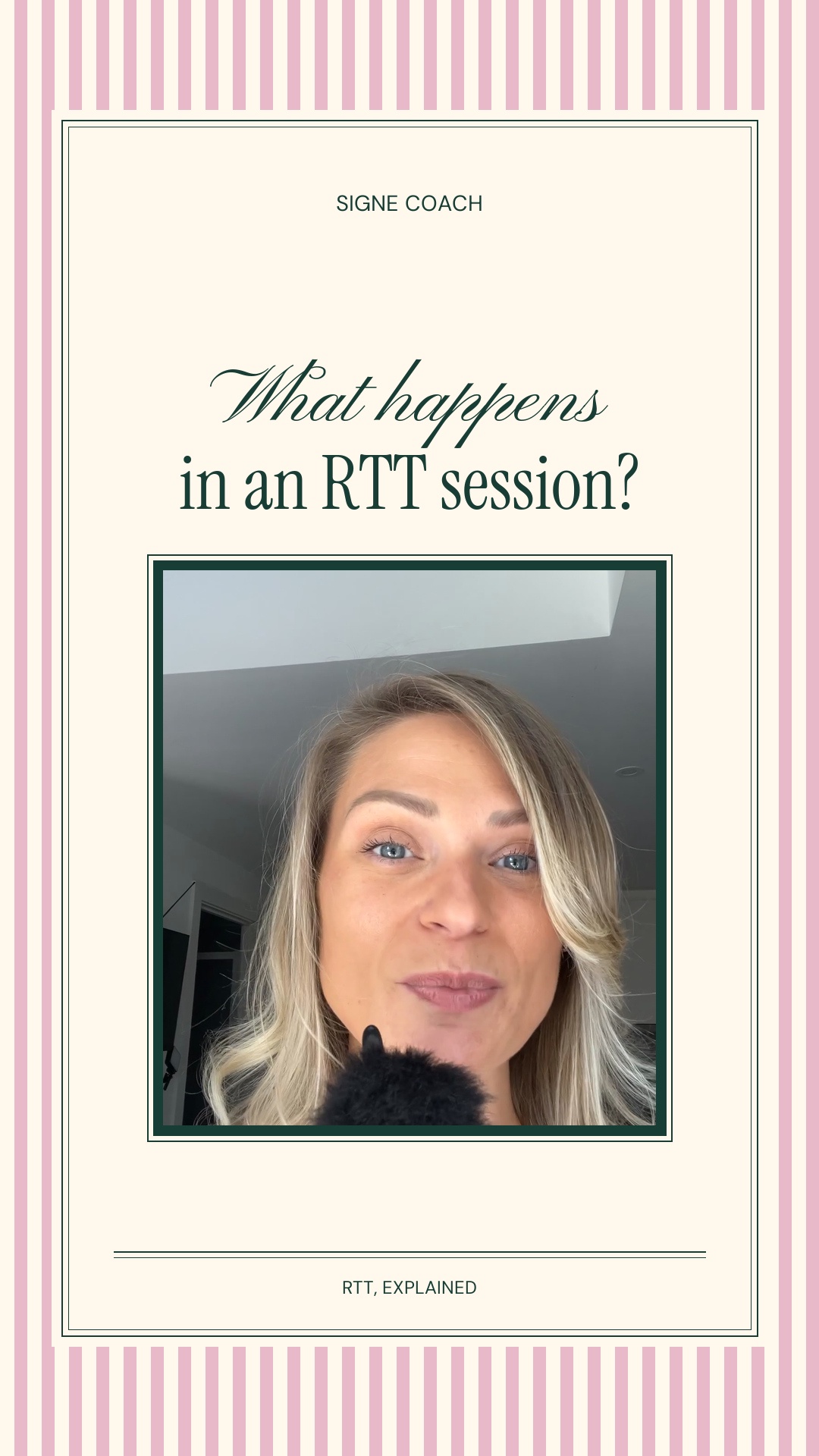
In this video, I share my perspective and approach. Loading it connects to Instagram, which may use cookies and receive your IP address. Nothing connects until you choose to load.
If the embed is blocked or asks you to sign in, open the original post.
Watch on Instagram ↗I know what it can do, because it changed my own life first.
My story: 2021 and the panic attacks
In 2021 I started working in marketing at a luxury superyacht shipyard in Italy. It was the job I had wanted for years. Beautiful yachts, demanding clients, a fast pace and a lot of visibility.
It was also when the panic attacks began. They came at work, often at the moments that mattered most. My heart raced, my chest tightened, and all I could think about was getting out of the room.
I remember deciding very clearly: I could not afford another one. I wanted to grow in that company, and I wanted to be the calm, capable person I knew I was underneath.
So I booked an RTT session. Together we explored where the fear came from, and I looked at it again with adult eyes. That changed what it meant to me.
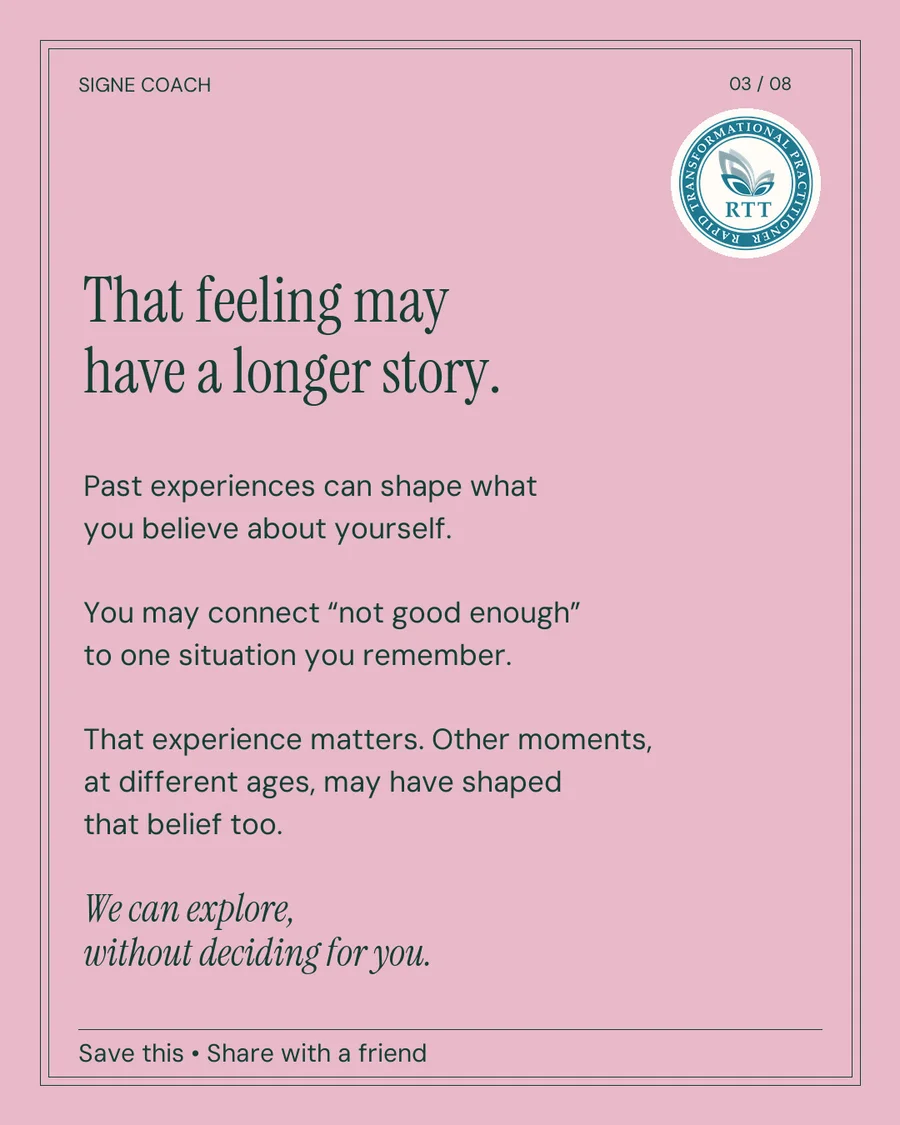
I listened to my recording every day. Since that session, I have had no more panic attacks. What came instead was space: space to speak up in meetings, take on bigger projects and trust myself. This is my experience. Yours will be your own, and we start from where you are.
“Once the fear lost its grip, other parts of my life started to move too.”
What changed over the years
This note is only partly about me. I share my story because it shows how far one change at the root can travel.
My career
I stayed at the shipyard for more than four years and grew with the brand. From there I became a marketing manager for a luxury interiors company, and today I run my own maritime branding agency alongside my practice. Each step asked me to be more visible, and each step felt possible.
My purpose
RTT worked so well for me that I wanted to understand it properly. I completed my RTT training in 2022 and became a certified practitioner. Helping women find their calm and their voice became the work I care about most.
My relationships
When you stop bracing for judgement, you show up differently with the people you love. I became more honest, more relaxed and better at asking for what I need.
This is the work I do with my clients now. The details of your story will be different. The process stays the same: understand the root, change the meaning, and give the new belief time to settle.
Where RTT comes from
RTT was developed by British therapist Marisa Peer over more than 30 years of working with clients, from CEOs and athletes to people facing everyday struggles. She is the author of five books, including I Am Enough and Tell Yourself a Better Lie.
She noticed that many clients understood their problem perfectly and still felt stuck. Knowing why was rarely enough. What helped was reaching the moment a belief formed and changing what it meant.
You know why it shouldn’t upset you
Read the text on the card
“You know why it shouldn’t upset you. But it still does. A small criticism. That familiar feeling: ‘I’m not good enough.’” Narrators introducing Marisa Peer.
She turned that insight into a structured method and a training school. Today RTT trains thousands of practitioners around the world each year. I am one of them.
The founder behind RTT
Read the text on the card
“Marisa Peer’s published biography describes work with Hollywood celebrities and athletes.” The audio is Vishen of Mindvalley introducing Marisa Peer. Client claims in the introduction are his and have not been independently verified.
A hybrid approach: what is inside RTT
RTT layers several well-known approaches into one session. Each brings something specific.
- Hypnotherapy helps you relax deeply, so you can reach feelings and memories that are hard to access in everyday thinking.
- Cognitive behavioural therapy looks at how thoughts, feelings and behaviour connect.
- Gestalt and solution-focused therapy keep the work in the present and pointed at the change you want.
- Mindfulness builds awareness of what is happening in your body and mind right now.
- Neuroplasticity is the principle underneath it all: your brain can form new patterns at any age.
What we do in an RTT session
Read the text on the card
“Rapid Transformational Therapy (RTT) uses hypnosis to help focus your attention. Together, we explore experiences and what you came to believe about yourself. You can ask questions or stop at any time.” Audio: Marisa Peer, masterclass welcome.
In practice, a session moves through three stages.
- Understanding the rootIn a relaxed, focused state, we look at the moments connected to the pattern and the meaning you gave them at the time.
- Changing the meaningYou look at those moments again with your adult understanding, and we build beliefs that fit who you are today.
- Reinforcing the changeI record a personal audio for you to listen to daily for 30 days. The mind learns through repetition, so this is where the new belief becomes familiar.
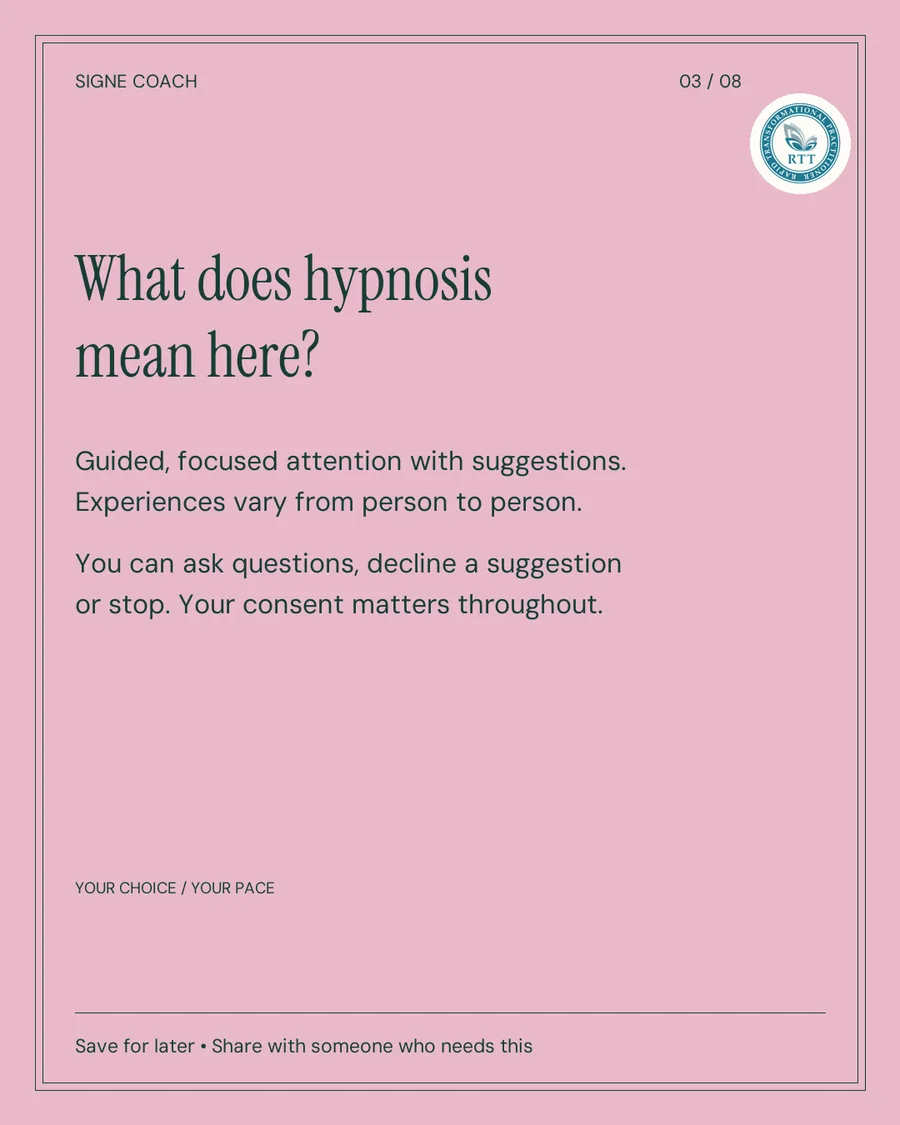
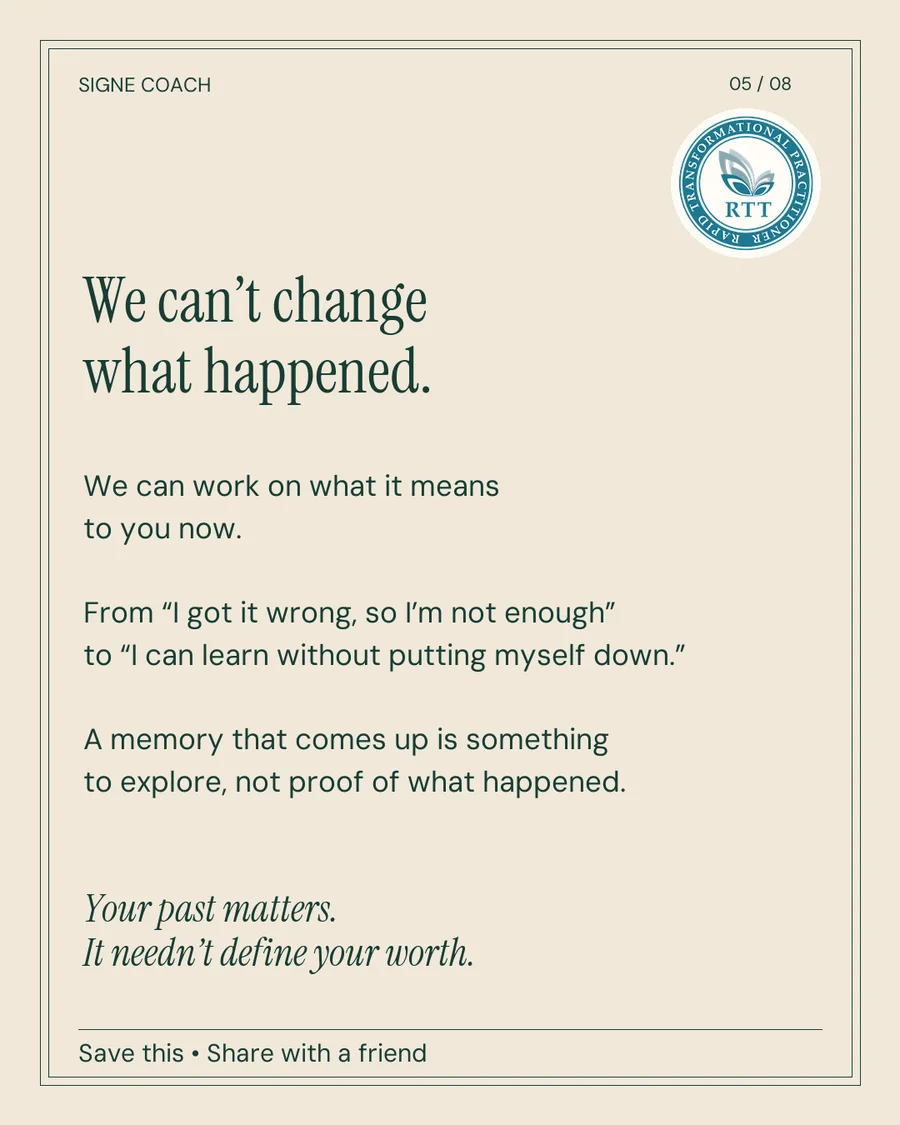
Throughout the session, you stay in charge. You can ask questions, decline a suggestion or stop at any time. Memories or images that come up are something we explore together with care. They are part of your story today, and they are never treated as proof of what happened.
What the research says
You deserve the full picture before you book, so here it is plainly.
At follow-up, the average person who received hypnosis had reduced anxiety more than about 84% of people in control groups. At the end of treatment the figure was about 79%.
Valentine et al., 2019 meta-analysis of 15 studiesRTT reports a positive change in over 80% of more than 1,000 client cases measured on a recognised wellbeing scale since 2020.
RTT’s own outcome dataThe average time for a new daily habit to become automatic, with a range of 18 to 254 days.
Lally et al., University College LondonHypnotherapy has a solid research base. The 2019 meta-analysis in the International Journal of Clinical and Experimental Hypnosis also found that hypnosis worked better when combined with other psychological approaches, which is how RTT is built.1
RTT’s own data is growing. The figure above comes from the method’s own records.2 Independent controlled trials of RTT itself are still to come, and a 2021 review in BEMS Reports called for exactly that.3
Repetition matters. New habits take time to settle.4 This is why every session with me includes 30 days of daily listening, and why some clients choose longer support.
Holistic coaching and RTT complement medical and mental health care. They are a way to work on beliefs and responses, alongside any support you already have.
How working with me works
Whoever you are and whatever brings you here, it starts with listening. Every session with me is a 30-day process. The session is where the change begins. The 30 days are where it settles into your everyday life.
- BeforeIntake callA free conversation in your own words. We agree the one issue to work on first.
- Day 1Your sessionA private online session using the three stages above.
- Days 1 to 30Your recordingYou listen daily, ideally at the same time each day.
- Day 30ReviewWith check-ins along the way, we look at what has changed and decide what comes next.
Practise a different way to respond
Read the text on the card
“A recording and small daily practice can support what we work on together. The aim? Hear feedback, ask a question, and enjoy your evening instead of spending it picking yourself apart.” Audio: Marisa Peer welcoming future practitioners. Her career invitation, not a promise of results.
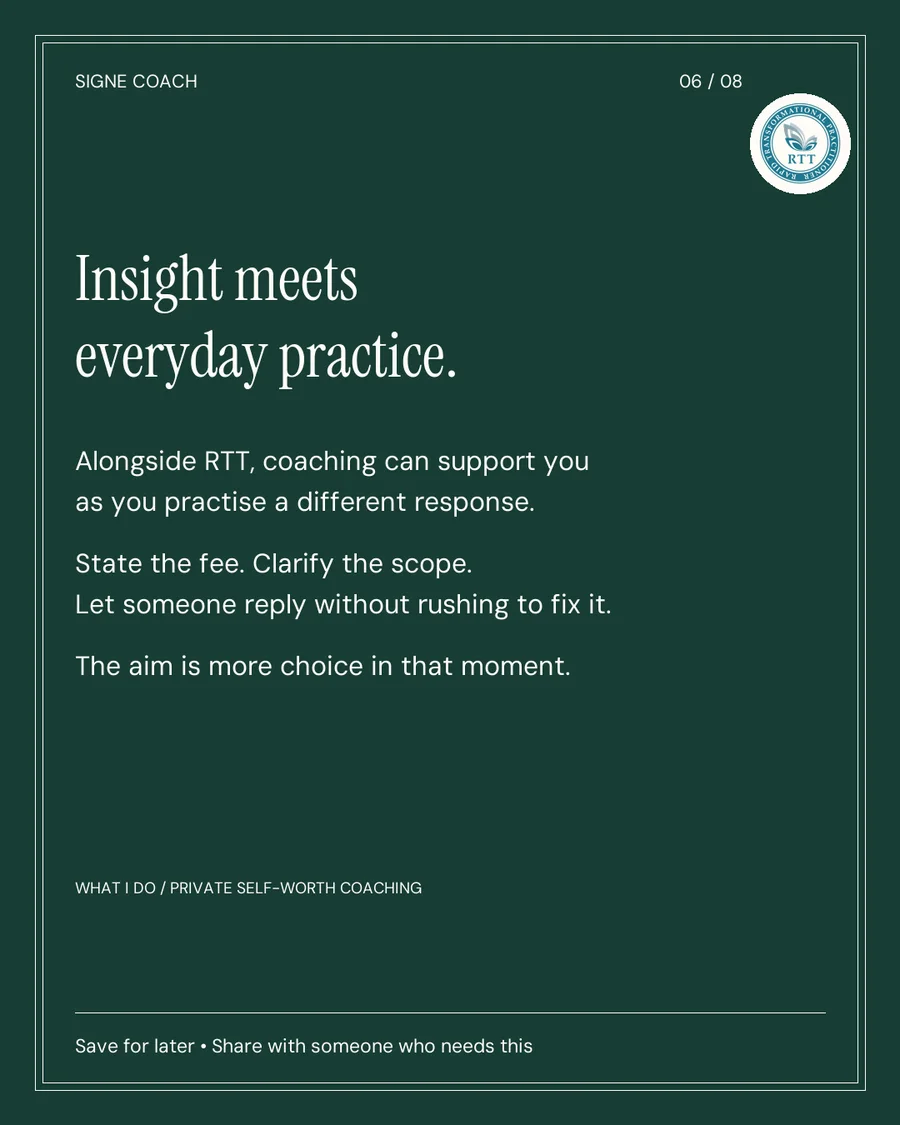
My private coaching programmes offer three months of support, with a six-month option where longer support fits. RTT sits inside a wider plan for confidence, career changes and everyday practice. We discuss suitability, scope and fees before you commit.
Everything you share stays between us, within the limits explained in my terms.
Who RTT suits, and when other support fits better
RTT works well for women who feel capable on the outside and stuck on the inside. The women I work with often come for:
- stress, worry or panic at work
- confidence and speaking up
- money beliefs, undercharging or asking for more
- boundaries and saying yes too quickly
- a career change or a big decision
- the feeling of never being enough
If you are in crisis, have a diagnosed mental health condition or feel unsafe, please speak to your doctor or a local crisis line first. If you work on yachts, YachtCrewHelp is free, confidential and open 24/7 by phone, WhatsApp or live chat. We can talk about RTT once you have the right support around you.
Before you decide
Questions people ask
What does RTT stand for?
Rapid Transformational Therapy. It is a hybrid method created by Marisa Peer that combines hypnotherapy, CBT, Gestalt, solution-focused therapy, mindfulness and neuroplasticity principles.
How many sessions will I need?
RTT usually uses one to three sessions per issue. Each session with me is a 30-day process. We decide together on the intake call, based on what you want to change.
Will I be in control during hypnosis?
Yes. You stay aware, you hear everything, and you can speak, ask questions or stop at any time. It feels like deep, focused relaxation.
Why do I listen to a recording?
The mind learns through repetition. Listening daily for 30 days helps the new belief become familiar.
Can we work online?
Yes. Sessions happen online, so you can join from home, from shore leave or from a quiet cabin, ideally in a private, off-duty setting.
How does RTT fit with medical treatment?
RTT works alongside medical and psychological care. If you have a diagnosed condition, we talk about how RTT fits with the support you already have.
Start here
If this felt familiar, here is where to begin.
- Try it at home, freeListen to my free Healing Vortex audio to get a feel for this kind of work.
- Talk to meBook a free intake call. You tell me what is happening, and we find the one issue to start with.
- Begin your changePrivate RTT and coaching over three months, with a six-month option where longer support fits.
With warmth, Signe